Home Blog Page 11

Education in 2025: Personalized Learning Beyond the Classroom

0

The education sector has undergone tremendous change in recent years. While schools and universities remain essential, the focus has shifted from rigid curricula to more flexible and personalized learning models. Students today are not limited to textbooks; they explore knowledge through interactive platforms, AI-powered tutoring, and global collaborations.

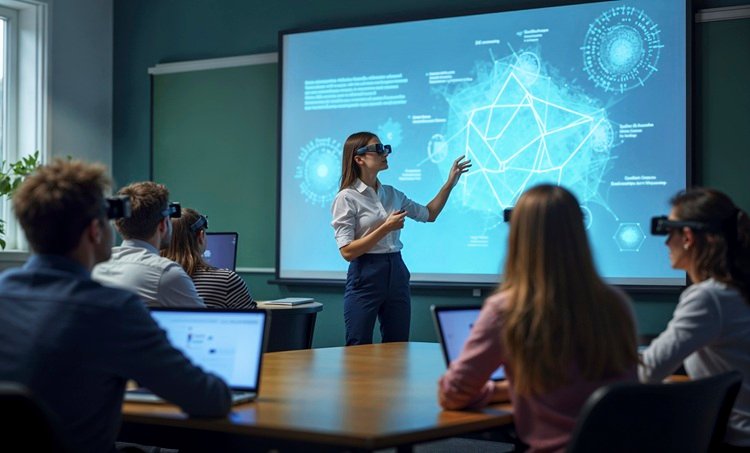
Technology has played a pivotal role. Virtual classrooms allow students in rural areas to learn from experts thousands of miles away. Artificial intelligence personalizes lessons by identifying strengths and weaknesses in real time. Instead of one-size-fits-all, students now receive tailored content that suits their pace and style.

Interestingly, the definition of education is also evolving. Life skills such as emotional intelligence, problem-solving, and digital literacy are becoming as important as academic subjects. Employers seek graduates who not only score well in exams but also adapt, innovate, and communicate effectively.

At the same time, access and affordability remain critical issues. While urban centers thrive with high-speed internet and advanced tools, many rural regions still struggle with basic connectivity. Bridging this gap is essential if education is to truly become inclusive.

Looking ahead, the future of education is likely to be hybrid — a blend of physical classrooms and digital platforms. This model offers the best of both worlds: face-to-face human interaction and unlimited online resources. Ultimately, education in 2025 is not about memorizing facts but preparing learners for a rapidly changing world.

The Changing Face of Global Business: How Innovation Redefines Success

0

Business today is no longer confined to physical offices or traditional trade routes. With the expansion of digital platforms, even small enterprises in remote towns can now compete with global giants. What was once a marketplace limited to physical interactions has transformed into a borderless digital hub.

xr:d:DAFlkJImtiA:8,j:6806458082076138931,t:23061200

The biggest driver of this change is technology. Cloud computing, artificial intelligence, and blockchain are no longer fancy terms used only by tech enthusiasts. They are now practical tools shaping modern business operations. From virtual meetings across time zones to AI-driven customer service, the ways companies connect with consumers have become faster, smarter, and more interactive.

Another defining feature of modern business is sustainability. Once considered an optional practice, eco-friendly operations have now become a necessity. Customers actively prefer brands that reduce carbon footprints, support local communities, and contribute to the well-being of the planet. This shows that profit and purpose no longer exist in isolation.

Furthermore, the rise of the “gig economy” is reshaping the workforce. Independent contractors, freelancers, and remote employees are not just temporary resources but vital contributors. They bring flexibility, cost-effectiveness, and a wide range of specialized skills to businesses of all sizes.

In this evolving business landscape, adaptability is the real measure of success. Companies that embrace change and align with consumer expectations are the ones who thrive. The future belongs to businesses that are not only smart in strategy but also empathetic toward people and the planet.

Creating Balance Between Work and Rest in the Modern Household

0

The modern home is no longer just a place to sleep and eat. For many, it has become an office, a gym, a classroom, and even a studio. But with so many roles packed into four walls, finding balance at home has become a pressing challenge.

The Blurring of Boundaries

Remote work blurred the once-clear line between professional and personal life. Laptops at dining tables, video calls in bedrooms — home became the workplace. While this brought convenience, it also created fatigue and burnout.

Designing Spaces with Intention

Experts recommend carving out physical zones for different activities. A corner desk signals work; a cozy nook encourages reading; a quiet spot fosters meditation. Even in small apartments, intentional design helps the brain separate tasks.

The Role of Family and Community

Homes are not just physical structures — they are emotional ecosystems. Sharing chores, setting boundaries, and dedicating time to family meals can restore balance. A household thrives not only on productivity but also on care and connection.

Technology as Helper, Not Master

Smart home devices can ease burdens — from scheduling reminders to managing energy use. But technology should remain a tool, not an overlord. Screen-free evenings or device-free meals are small steps toward reclaiming home life.

A balanced home is not about perfection. It’s about creating a rhythm where rest, work, and connection coexist harmoniously. In the chaos of modern life, home should remain the center of peace.

The Hidden Strength of Small Communities in a Globalized World

0

When discussions turn to power and progress, the spotlight often shines on megacities and global corporations. Yet hidden in the folds of villages, small towns, and local groups lies a different kind of strength — one that is shaping the future in quiet, steady ways.

Local Solutions to Global Problems

Small communities are often first responders to global challenges. Whether it’s disaster relief, grassroots climate initiatives, or cultural preservation, their actions ripple outward. These groups don’t wait for policy; they adapt and innovate on their own terms.

Preserving Identity

In a world where globalization blends cultures together, local traditions stand as anchors. Festivals, crafts, dialects, and food practices keep heritage alive. These cultural treasures remind us that progress doesn’t mean erasing the past — it means carrying it forward.

Economic Resilience

While global markets fluctuate, local economies often show surprising resilience. Community-owned businesses, cooperatives, and local agriculture provide stability when global supply chains falter.

A New Appreciation

As digital connections grow, small communities are no longer invisible. Social media and online platforms give them global stages, amplifying their voices far beyond their geographic boundaries.

The strength of small communities proves that even in a globalized age, the local heartbeat still matters.

Climate Migration — The Human Story of a Warming Planet

0

Climate change is often discussed in terms of temperature graphs, sea levels, and carbon emissions. But behind the statistics are human lives. In 2025, climate migration has become one of the world’s most urgent humanitarian challenges.

Rising Seas, Shifting Homes

Coastal communities are among the hardest hit. Rising sea levels are forcing families to leave ancestral lands, uprooting traditions that have existed for centuries. Islands in the Pacific and low-lying cities are at the front lines of this crisis.

Droughts and Food Insecurity

Inland, the story is different but just as severe. Droughts are making agriculture unsustainable in many regions. Farmers are abandoning lands that no longer yield crops, joining waves of internal migrants searching for survival.

Political Tensions

Mass displacement creates new tensions between nations. Borders, already points of contention, are now challenged by climate refugees. Governments must grapple with questions of responsibility, compassion, and security.

Hope Amid Displacement

Yet amidst the crisis, resilience shines. Communities are innovating with floating schools, climate-adaptive farming, and renewable energy hubs. International aid groups are beginning to prioritize not just relief, but sustainable futures for displaced populations.

The story of climate migration is not just about loss — it is about adaptation, resilience, and a shared responsibility for a planet we all call home.

The Growing Link Between Nutrition and Mental Well-Being

0

When people think about mental health, therapy and meditation often come to mind. But research in 2025 is revealing something equally powerful: the food we eat may shape our minds as much as our moods.

The gut-brain connection has become a major focus in health science. The microbiome — the community of bacteria living in our digestive system — plays a surprising role in how we feel. A balanced microbiome can improve mood, reduce anxiety, and even sharpen focus. On the other hand, processed foods high in sugar and artificial additives can disrupt gut health, leading to fatigue, irritability, and mood swings.

Nutritional psychiatry, a growing medical field, is now prescribing dietary changes alongside traditional therapy. Diets rich in whole grains, leafy greens, and omega-3 fats are linked to lower depression rates. Foods like yogurt, kimchi, and kefir — packed with probiotics — are proving valuable for mental resilience.

This doesn’t mean food is a cure-all. Mental health is complex and influenced by genetics, environment, and lifestyle. But nutrition is becoming a vital tool in prevention and recovery.

As awareness grows, more people are treating meals as medicine. Supermarkets are responding with brain-healthy food sections, while schools are revising meal plans. The future of health may be served not in capsules, but on plates.

How Streaming Has Redefined Celebrity Culture

0

The idea of “celebrity” has transformed dramatically in the last decade. In the past, fame was reserved for actors, singers, or athletes. Today, thanks to streaming platforms and social media, almost anyone can become a star.

Platforms like YouTube, Twitch, and TikTok have created a new wave of influencers whose followings rival — or even surpass — Hollywood names. Unlike traditional celebrities, these digital creators connect with fans daily. They share their routines, their vulnerabilities, and their creative process.

This closeness creates a new kind of fandom. Followers don’t just watch from a distance; they feel like part of the journey. This intimacy has shifted the entertainment industry’s power balance. Brands are spending billions on influencer partnerships because audiences trust these figures more than polished advertisements.

Streaming has also blurred the lines between entertainment and reality. A gamer streaming for eight hours can pull more viewers than a prime-time TV show. A podcaster with a niche audience can influence cultural conversations as strongly as a magazine.

While traditional celebrities still dominate blockbuster films and red carpets, digital creators have carved out their own empires. The future of celebrity is not about exclusivity — it is about accessibility. Fame is no longer given; it is built, one stream at a time.

The Rise of Micro-Learning and Its Impact on Students

0

Traditional education has long been built on long lectures, thick textbooks, and structured courses. But the digital age is reshaping how students learn. The buzzword of 2025 is micro-learning — the delivery of knowledge in small, digestible pieces.

Instead of sitting through a two-hour lecture, learners now access five-minute video lessons, interactive quizzes, or quick podcasts that target one concept at a time. This model fits modern lifestyles, where attention spans are short and time is fragmented.

Micro-learning is particularly effective for professional skills. Busy workers can learn coding basics, marketing strategies, or even foreign languages during commutes or coffee breaks. Educational platforms are thriving because they cater to learners on-demand, anywhere, anytime.

But critics warn against oversimplification. Complex subjects, like philosophy or advanced science, cannot always be condensed into bite-sized lessons. The challenge for educators is finding balance: using micro-learning to spark curiosity while encouraging deeper exploration.

Still, the movement is undeniable. Micro-learning democratizes knowledge. It lowers barriers to education, making it possible for more people to learn at their own pace. In the coming years, it may become not just a supplement but a foundation of modern education.

Why Purpose-Driven Companies Are Winning in 2025

0

For decades, the success of a business was measured in profits and market share. But in 2025, the businesses rising fastest are not only profitable — they are purposeful.

A purpose-driven company builds its strategy around values that extend beyond money. Whether it’s sustainability, ethical labor, or community investment, purpose has become a magnet for both customers and employees.

Surveys reveal that younger generations, especially Gen Z, choose brands that reflect their beliefs. They’re more likely to pay extra for products that are eco-friendly or ethically sourced. They’re also more likely to stay loyal to a company that communicates openly about its mission.

Purpose doesn’t mean charity. It’s a strategic advantage. A fashion brand that invests in recycled materials is not only reducing waste but also appealing to environmentally conscious shoppers. A food company that supports local farmers strengthens supply chains while building trust.

Internally, employees at purpose-driven companies often show higher motivation and creativity. They feel their work matters, which improves retention and innovation.

The businesses thriving today understand that the question is no longer “What do we sell?” but “Why do we exist?” And in a competitive market, purpose is not a side note — it is the new bottom line.

The Lost Art of Slowing Down in a Restless Digital World

0

The modern internet has given us everything in seconds — breaking news, viral videos, trending hashtags, and an endless stream of entertainment. Yet in the rush for speed, something deeply human has been left behind: the art of slowing down.

Blogging itself once carried this slower rhythm. Writers used to reflect, pause, and share thoughts in long paragraphs rather than short tweets. Readers came to blogs not for instant gratification but for connection. The blogger’s voice mattered. Their pauses, their imperfections, their rambling honesty gave depth to online conversations.

Today, many blogs chase algorithms. Writers push out keyword-heavy posts designed more for search engines than human eyes. The warmth of personal voice is often stripped away. But something is shifting again. A new generation of readers is rediscovering the intimacy of long-form writing, craving essays that feel alive, not automated.

Slowing down doesn’t mean resisting technology. It means using it with intention. It means writing in a way that readers can lean into, not just skim. It means crafting articles that feel like letters rather than marketing material.

When we write — or read — slower, we invite curiosity back into our minds. We make space for reflection. We remind ourselves that stories are not just data; they are bridges. And in that pause, we rediscover what made blogging powerful in the first place: the human voice.